

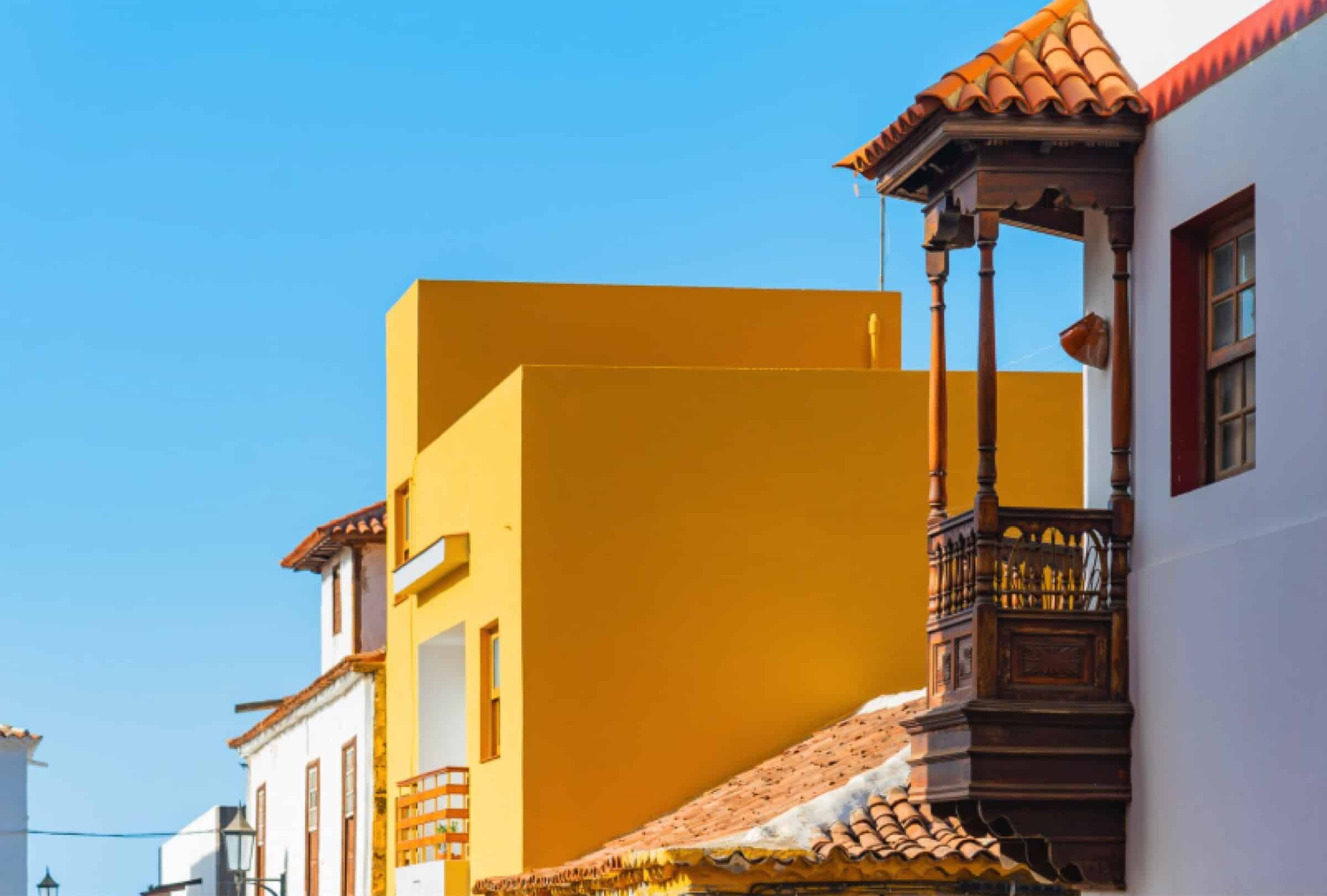
The Algarve is known for its sunshine, but longer dry periods and warmer summers are changing what a comfortable home requires. At Lusaterra we believe good design starts long before any technical installation is chosen. It begins with the way a house sits on its land, how it catches or avoids the sun, and how air moves through its rooms.
Orientation and shade come first
The position of a home on its plot shapes almost everything that follows. Living spaces that open towards the light feel generous in winter, while careful placement of windows and terraces prevents the strongest summer sun from heating the interior. Deep overhangs, pergolas and covered terraces create shade exactly where it is needed, so outdoor spaces remain usable during the warmest hours of the day.
Natural ventilation is just as important. Rooms that allow air to flow from one side of the house to the other cool down quickly in the evening, when the temperature drops. These are simple principles, rooted in the traditional architecture of the region, and they remain among the most effective tools a designer has.
Building for cool, stable interiors
Thick walls and good insulation keep heat out in summer and comfort in during the cooler months. The result is an interior that stays pleasant without constant air conditioning. Where a house is rebuilt from the ground up, as with Villa Lusaterra, it can be designed to meet current standards for insulation and energy efficiency from the start.
Renovation offers its own opportunities. At Casa Bedrock, the traditional character of the villa, with its white façades and terracotta roof tiles, was combined with entirely new installations. White exterior walls reflect sunlight, a quiet reminder that the vernacular architecture of the Algarve was already designed for this climate.
Energy that comes from the sun
The same sunshine that warms the Algarve can also power a home. Solar panels, combined with careful insulation, lower energy costs throughout the year. Both Villa Lusaterra and Casa Bedrock have solar panels and energy label A, which means owners live comfortably while keeping running costs low.
We see sustainability not as an extra feature but as part of what makes a home good. A house that uses little energy is more pleasant to live in, easier to maintain and better prepared for the decades ahead.
Gardens that need little water
A home in the Algarve is never only about the interior. Terraces, pools and gardens are where much of daily life takes place. Mediterranean planting such as olive trees, lavender and rosemary needs little water and looks good in every season. Agaves and low natural stone walls add structure and texture, while asking for very little maintenance.
This kind of garden belongs to the landscape rather than competing with it. It ages well, it supports a calm and natural atmosphere, and it spares owners the effort and cost of keeping thirsty lawns green through the summer.
- Olive trees for shade, structure and a sense of permanence
- Lavender and rosemary for colour and scent with minimal watering
- Agaves and other hardy plants for low-maintenance borders
- Natural stone walls that frame the garden and retain the soil
Designing for the decades ahead
Climate-conscious design is ultimately about longevity. A home that stays cool naturally, produces part of its own energy and sits comfortably in its landscape will remain pleasant to live in for many years. These principles guide every project in our portfolio, from restored villas to new townhouses such as Alto Mar Residences in Ferragudo, where large glass façades and private south-facing pools are planned with the Algarve light in mind.
Do you own a plot in the Algarve and wonder what kind of home it could support? We are always interested in land with potential. Find out how to offer your land to Lusaterra, or get in touch to discuss your ideas.